Photo by Mikhail Nilov on Pexels
Manufacturing Automation Tools: Enhancing Efficiency and Productivity
Introduction to Manufacturing Automation
Manufacturing automation refers to the use of technology to minimize human intervention in manufacturing processes. This encompasses a wide range of tools and systems, from simple mechanical devices to complex robotic systems and sophisticated software. The primary goals of implementing automation are to increase production speed, improve product quality, reduce labor costs, and enhance overall operational efficiency. As the landscape of Industry-Specific Business Applications evolves, automation emerges as a key driver for manufacturers looking to maintain a competitive edge.
Types of Manufacturing Automation Tools
The landscape of manufacturing automation tools is diverse, catering to a wide range of needs and applications. These tools can be broadly categorized based on their functionality and level of sophistication:
Robotics
Robotics plays a central role in modern manufacturing automation. Industrial robots are used for tasks such as welding, painting, assembly, material handling, and inspection. They offer precision, speed, and the ability to work continuously without fatigue. There are several types of industrial robots, including:
- Articulated Robots: These robots have rotary joints and can perform a wide range of tasks.
- SCARA Robots: Selective Compliance Articulated Robot Arms are ideal for assembly operations.
- Delta Robots: These robots excel at high-speed pick-and-place tasks.
- Collaborative Robots (Cobots): Designed to work alongside humans, cobots are equipped with safety features that allow for close interaction.
Computer Numerical Control (CNC) Machines
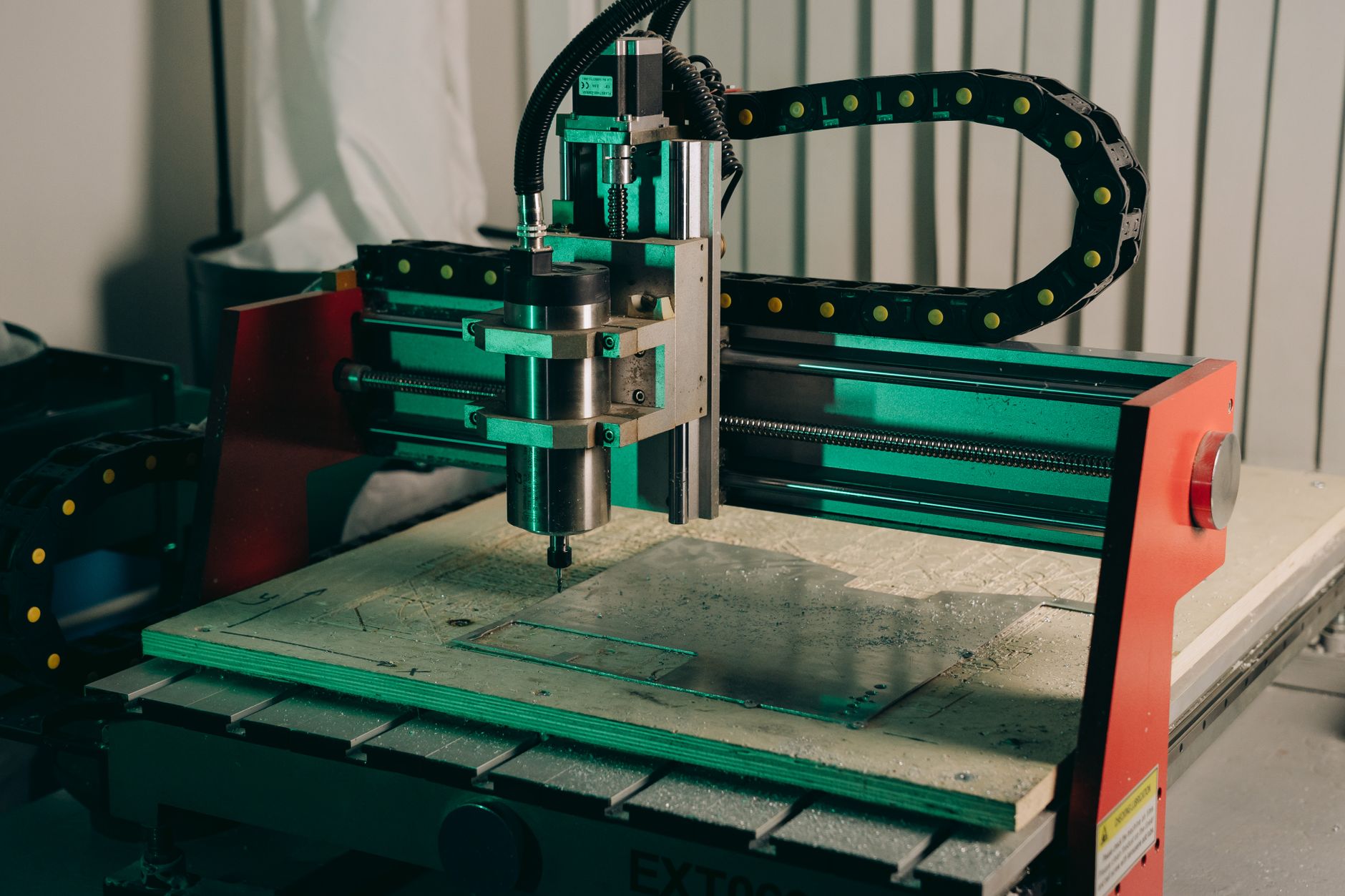
CNC machines automate the operation of machine tools such as lathes, milling machines, and grinders. These machines use computer-controlled programs to precisely control the movement of cutting tools, enabling the production of complex parts with high accuracy and repeatability. CNC automation is crucial for industries requiring precision manufacturing.
Programmable Logic Controllers (PLCs)
PLCs are specialized computers used to automate industrial processes. They monitor input signals from sensors and execute control programs to operate outputs such as motors, valves, and actuators. PLCs are highly reliable and can withstand harsh industrial environments, making them ideal for controlling automated systems.
Supervisory Control and Data Acquisition (SCADA) Systems
SCADA systems provide real-time monitoring and control of industrial processes. They collect data from various sensors and devices, display it to operators, and allow them to remotely control equipment. SCADA systems are used in a wide range of industries, including manufacturing, oil and gas, and water treatment.
Automated Guided Vehicles (AGVs) and Autonomous Mobile Robots (AMRs)
AGVs and AMRs are used to automate material handling within a manufacturing facility. AGVs follow predefined paths using wires, magnetic strips, or lasers, while AMRs use sensors and software to navigate autonomously. They improve efficiency and reduce the risk of accidents by automating the movement of materials and products.
Automated Storage and Retrieval Systems (AS/RS)
AS/RS systems automate the storage and retrieval of materials and products in warehouses and distribution centers. These systems use automated cranes or shuttles to move items in and out of storage locations, improving space utilization and reducing labor costs.
Manufacturing Execution Systems (MES)
MES software provides real-time monitoring and control of manufacturing operations. It tracks production progress, manages inventory, and provides insights into process performance. MES helps manufacturers optimize production schedules, reduce waste, and improve product quality. As part of the broader ecosystem of Industry-Specific Business Applications, MES plays a critical role in integrating different aspects of the manufacturing process.
3D Printing (Additive Manufacturing)
3D printing, also known as additive manufacturing, creates three-dimensional objects from digital designs by layering materials such as plastics, metals, and ceramics. It's used for prototyping, tooling, and producing customized parts. 3D printing reduces lead times and allows for the creation of complex geometries that are difficult or impossible to manufacture using traditional methods. When illustrating manufacturing processes, resources such as KDS Stock Images can be a useful source for visuals.
Benefits of Implementing Manufacturing Automation
Implementing manufacturing automation tools offers numerous benefits, impacting various aspects of the production process and the overall business:
- Increased Productivity: Automated systems can operate continuously and at higher speeds than human workers, leading to increased production output.
- Improved Product Quality: Automation reduces the risk of human error, resulting in more consistent and higher-quality products.
- Reduced Labor Costs: Automation reduces the need for manual labor, leading to lower labor costs.
- Enhanced Safety: Automated systems can perform dangerous tasks, reducing the risk of injuries to human workers.
- Greater Flexibility: Automated systems can be easily reprogrammed to produce different products, allowing manufacturers to respond quickly to changing market demands.
- Better Data Collection and Analysis: Automated systems generate large amounts of data that can be analyzed to identify areas for improvement.
Challenges of Implementing Manufacturing Automation
While the benefits are compelling, implementing manufacturing automation also presents several challenges:
- High Initial Investment: Automation systems can be expensive to purchase and install.
- Integration Complexity: Integrating different automation systems can be complex and require specialized expertise.
- Maintenance Requirements: Automated systems require regular maintenance to ensure they operate reliably.
- Skills Gap: Operating and maintaining automated systems requires skilled workers, which can be difficult to find.
- Job Displacement: Automation can lead to job displacement, which can be a concern for workers.
Considerations for Selecting Automation Tools
When selecting manufacturing automation tools, consider the following factors:
- Specific Needs: Identify the specific tasks and processes that need to be automated.
- Budget: Determine the budget for automation investments.
- Scalability: Choose systems that can be scaled up or down as needed.
- Integration Capabilities: Ensure that the chosen systems can be integrated with existing systems.
- Vendor Support: Select vendors that offer reliable support and training.
Furthermore, consider how the automation solution integrates with other Industry-Specific Business Applications to ensure seamless data flow and operational efficiency.
Future Trends in Manufacturing Automation
The field of manufacturing automation is constantly evolving, driven by advancements in technology. Some of the key trends shaping the future of manufacturing automation include:
- Artificial Intelligence (AI) and Machine Learning (ML): AI and ML are being used to optimize production processes, predict equipment failures, and improve product quality.
- Industrial Internet of Things (IIoT): IIoT connects machines and devices, enabling real-time data collection and analysis.
- Digital Twins: Digital twins are virtual replicas of physical assets that can be used to simulate and optimize performance.
- Edge Computing: Edge computing processes data closer to the source, reducing latency and improving response times.
- Cybersecurity: As manufacturing systems become more connected, cybersecurity becomes increasingly important.
Conclusion
Manufacturing automation tools are essential for manufacturers looking to improve efficiency, reduce costs, and enhance product quality. By carefully selecting and implementing the right automation solutions, manufacturers can gain a competitive advantage in today's global market. Keeping abreast of the latest developments in Industry-Specific Business Applications and automation technologies is crucial for sustained success.
FAQ
What is the difference between automation and robotics?
Automation is a broader concept that encompasses the use of technology to reduce human intervention in processes. Robotics is a specific type of automation that involves the use of robots to perform tasks.
How can I justify the investment in manufacturing automation?
Justify the investment by calculating the return on investment (ROI) based on factors such as increased productivity, reduced labor costs, and improved product quality. Also, consider the long-term benefits of automation, such as increased flexibility and enhanced competitiveness.
What skills are needed to work with manufacturing automation systems?
Skills needed include programming, electrical engineering, mechanical engineering, and data analysis. Many companies offer training programs to help workers develop these skills.
Comments
Post a Comment