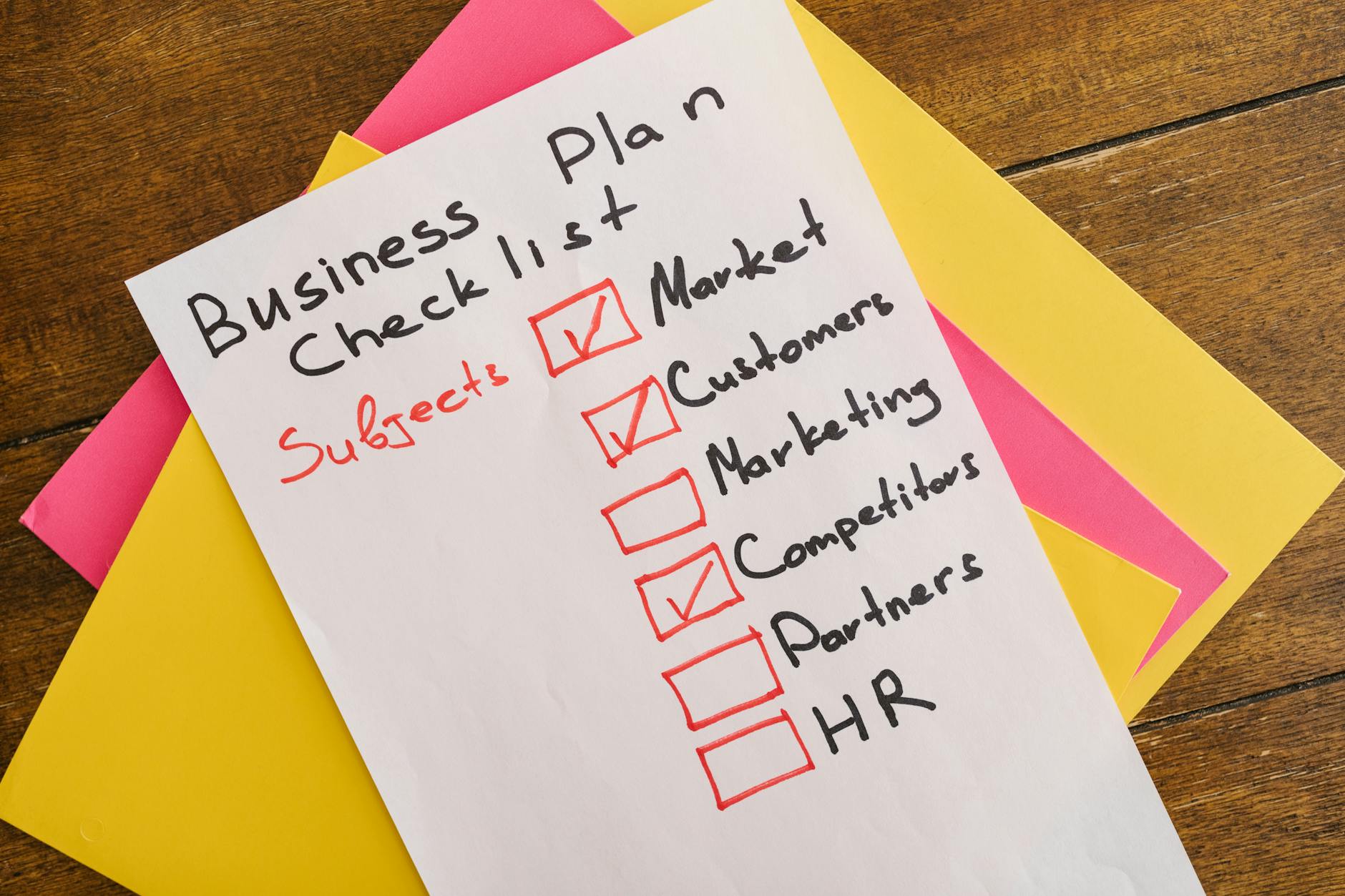
Photo by RDNE Stock project on Pexels
How to Validate Startup Ideas: A Comprehensive Guide
Introduction
Validating a startup idea is a critical step in the entrepreneurial process. It involves testing your assumptions about the market, customer needs, and the viability of your proposed solution before investing significant time and resources. This process helps minimize risk and increases the likelihood of building a successful business within the realm of
Entrepreneurship & Startups.
Why is Idea Validation Important?
Failing to validate a startup idea can lead to several negative outcomes. These include:
Building a product or service that nobody wants or needs.
Wasting time and money on development and marketing efforts.
Missing opportunities to pivot or refine the idea based on early feedback.
Losing investor confidence.
Idea validation helps entrepreneurs make informed decisions based on evidence rather than gut feelings. It allows for early course correction, ensuring that the final product aligns with market demands.
Methods for Validating Startup Ideas
There are numerous methods for validating startup ideas, ranging from simple conversations to more formal market research. Here are some effective approaches:
Problem Interviews
Problem interviews focus on understanding the pain points and challenges potential customers face. The goal is to determine if the problem your startup aims to solve is real, prevalent, and worth solving.
Identify your target audience: Define the specific demographic or group you intend to serve.
Prepare open-ended questions: Ask questions that encourage respondents to share their experiences and perspectives. Avoid leading questions that might bias their answers. For example, instead of asking "Would you use a product that does X?", ask "What are your biggest challenges when doing Y?".
Conduct interviews: Reach out to potential customers and conduct one-on-one interviews. Aim for a sample size that provides sufficient insights (at least 10-15 interviews).
Analyze the results: Look for patterns and common themes in the responses. Determine if the problem resonates with a significant portion of your target audience.
Solution Interviews
Once you have validated the problem, the next step is to validate your proposed solution. Solution interviews focus on gauging customer interest in your product or service.
Present your solution: Clearly describe your product or service to potential customers. Use visuals, prototypes, or demos whenever possible.
Gather feedback: Ask for honest feedback on the proposed solution. What do they like? What do they dislike? What features are missing?
Assess willingness to pay: Determine if customers are willing to pay for your solution. Ask about their price sensitivity and what they consider a fair price.
Refine your solution: Use the feedback to iterate and improve your product or service.
Minimum Viable Product (MVP)
An MVP is a basic version of your product with only the core features necessary to solve the primary problem. It allows you to test your assumptions and gather feedback with minimal investment.
Identify core features: Determine the most essential features required to address the primary problem.
Build the MVP: Develop a simple, functional version of your product with only these core features.
Launch the MVP: Release the MVP to a small group of early adopters or beta testers.
Collect feedback: Monitor user behavior and gather feedback through surveys, interviews, and analytics.
Iterate and improve: Use the feedback to refine your product and add new features incrementally.
Landing Page Testing
Creating a simple landing page to gauge interest in your product or service can be a cost-effective validation method.
Create a landing page: Design a landing page that describes your product or service and its benefits.
Drive traffic: Use online advertising, social media, or content marketing to drive traffic to your landing page.
Track conversions: Monitor the number of visitors who sign up for a demo, subscribe to a newsletter, or express interest in learning more.
Analyze results: Use the conversion rate to gauge the level of interest in your product or service. A high conversion rate indicates strong demand.
Competitive Analysis
Understanding the competitive landscape is crucial for validating your startup idea. One can learn from the approaches taken in different sectors. For instance, exploring resources like
Game Dev Center can offer insights into validating game development ideas which can then be applied to other industries.
Identify competitors: Research existing companies that offer similar products or services.
Analyze their strengths and weaknesses: Determine what your competitors do well and where they fall short.
Identify your unique value proposition: Define what makes your product or service different and better than the competition.
Assess market size and potential: Estimate the size of the market and the potential for growth.
Surveys and Questionnaires
Surveys can be a valuable tool for gathering quantitative data on customer preferences and needs.
Define your objectives: Determine what you want to learn from the survey.
Develop clear and concise questions: Use simple language and avoid jargon.
Choose the right survey platform: Select a platform that allows you to reach your target audience and analyze the results effectively.
Promote the survey: Distribute the survey through email, social media, or online advertising.
Analyze the results: Look for patterns and trends in the responses.
Analyzing Validation Results
Once you've collected data from various validation methods, it's time to analyze the results and draw conclusions. Look for evidence that supports or refutes your initial assumptions.
Focus on data: Base your decisions on concrete data rather than gut feelings.
Identify key insights: Look for patterns and trends that provide valuable insights into customer needs and preferences.
Be prepared to pivot: If the data suggests that your initial idea is not viable, be willing to adjust your approach or pursue a different direction within the
Entrepreneurship & Startups world.
Iterate and refine: Use the insights to refine your product or service and make it more aligned with market demands.
Conclusion
Validating startup ideas is an essential process that helps entrepreneurs minimize risk and increase the likelihood of success. By using a combination of problem interviews, solution interviews, MVPs, landing page testing, competitive analysis, and surveys, entrepreneurs can gather valuable data and make informed decisions. The goal is to build a product or service that meets a real need and provides value to customers.
FAQ
Q: How much time should I spend validating my startup idea?
A: The amount of time spent on validation will vary depending on the complexity of the idea and the resources available. However, it is generally recommended to dedicate at least a few weeks to thorough validation before investing significant time and money into development.
Q: What if my idea fails validation?
A: Failing validation is not necessarily a bad thing. It means you have avoided wasting time and resources on an unviable idea. Use the insights gained to pivot, refine your approach, or explore other opportunities.
Q: Can I validate multiple ideas simultaneously?
A: Yes, you can validate multiple ideas simultaneously, but it is important to focus your efforts and prioritize the ideas with the most potential.
Q: Is it possible to validate an idea completely before building anything?
A: While it's impossible to guarantee complete validation before building anything, employing validation techniques can significantly reduce risks and increase the likelihood of creating a successful product or service.
Comments
Post a Comment